
Quick Summary
Choosing commercial fencing in Columbus, Ohio starts with defining the property’s security needs, access points and daily operations. Material selection should also account for maintenance, visibility, privacy and the professional image a business wants to present. Chain link, aluminum, vinyl and custom fencing can each serve different commercial priorities when planned around the site. Murphy Fence LLC combines more than 20 years of fencing experience with local project planning and professional installation for Central Ohio businesses.
Choosing a commercial fence involves more than selecting a material and setting a property boundary. The fence may need to deter unauthorized access, guide traffic, protect equipment, provide privacy and maintain a professional appearance for customers, employees and visitors.
For businesses evaluating commercial fencing solutions in Columbus, Ohio, the best choice depends on how the property is used, where people and vehicles enter, what level of visibility is needed and how much maintenance the business wants to manage over time. A thoughtful plan helps the finished fence support security without feeling disconnected from the property or brand.
Start With Security and Day-to-Day Business Needs
Security should be evaluated in practical terms. A retail property, office, warehouse, multi-unit development and industrial site may all need perimeter fencing, but they do not necessarily need the same height, material or degree of privacy. The right design begins with the risks and operations specific to the site.
Identify What the Fence Needs to Protect
Start by identifying the areas that matter most. That may include parking lots, storage zones, service yards, loading areas, equipment, utilities or employee-only spaces. A fence can help define these areas and create a clearer physical barrier between public access and restricted property.
Visibility is another consideration. Some businesses benefit from an open perimeter that allows staff to see through the fence while others need screening around equipment or back-of-house areas. Defining that requirement early makes material selection easier and helps avoid paying for features that do not support the actual purpose of the fence.
Plan Gates and Access Points Before Choosing the Final Layout
A commercial fence is only as functional as its entry points. Vehicle gates, pedestrian gates, delivery access and service entrances should be planned around normal traffic patterns. Poor gate placement can create congestion or force employees and visitors into inconvenient routes.
Gate width, clearance, hardware and frequency of use also affect the design. A layout that looks good on paper may not work well if trucks need extra turning room or if a busy pedestrian entrance is squeezed into the wrong part of the perimeter. Professional planning helps the fence support daily operations instead of becoming an obstacle.
Balance Security With Brand Image and Curb Appeal
A commercial fence is often one of the first exterior features people notice. For customer-facing properties, that means the fence can influence the overall impression of the business. Security matters, but the fence should also fit the architecture, landscaping and level of formality the property needs.
Choose the Right Mix of Privacy and Visibility
A solid or privacy-oriented fence can screen storage areas and reduce sightlines into parts of the property that are not intended for public view. An open fence can preserve visibility and make the property feel less enclosed while still defining the perimeter. The right balance depends on what the business is protecting and what customers or employees should be able to see.
Height should be considered in the same way. More height may be useful in certain security applications, but local requirements and the property context can affect what is appropriate. The goal is to create a barrier that supports the business without overwhelming the site.
Match the Fence to the Building and Business Image
Material, color, spacing and gate design can make a commercial fence look intentional rather than purely utilitarian. A clean aluminum fence may suit an office, retail or professionally landscaped property while a durable chain link system may be a better fit for a warehouse, utility area or large perimeter where function and visibility are higher priorities.
Businesses with unusual layouts or specific visual requirements may benefit from a customized design. The fence does not need to copy the building exactly, but its proportions and finish should feel compatible with the property.
Compare Commercial Fence Materials by Function
No single fence material is the best option for every business. Security goals, budget, maintenance, privacy and visual expectations all affect the decision. Comparing materials by function is more useful than choosing based on appearance alone.
Chain Link for Practical Perimeter Security
Chain link fencing is a practical choice for commercial properties that need a durable perimeter while maintaining visibility. It can work well around warehouses, industrial areas, utility spaces, sports facilities and larger commercial lots. Height, gauge, coating and privacy options can be adjusted to fit different applications.
For businesses that need screening in selected areas, privacy slats can add coverage without changing the entire fence system. Chain link is especially useful when the primary goals are containment, visibility, straightforward maintenance and cost control.
Aluminum for a Clean, Professional Appearance
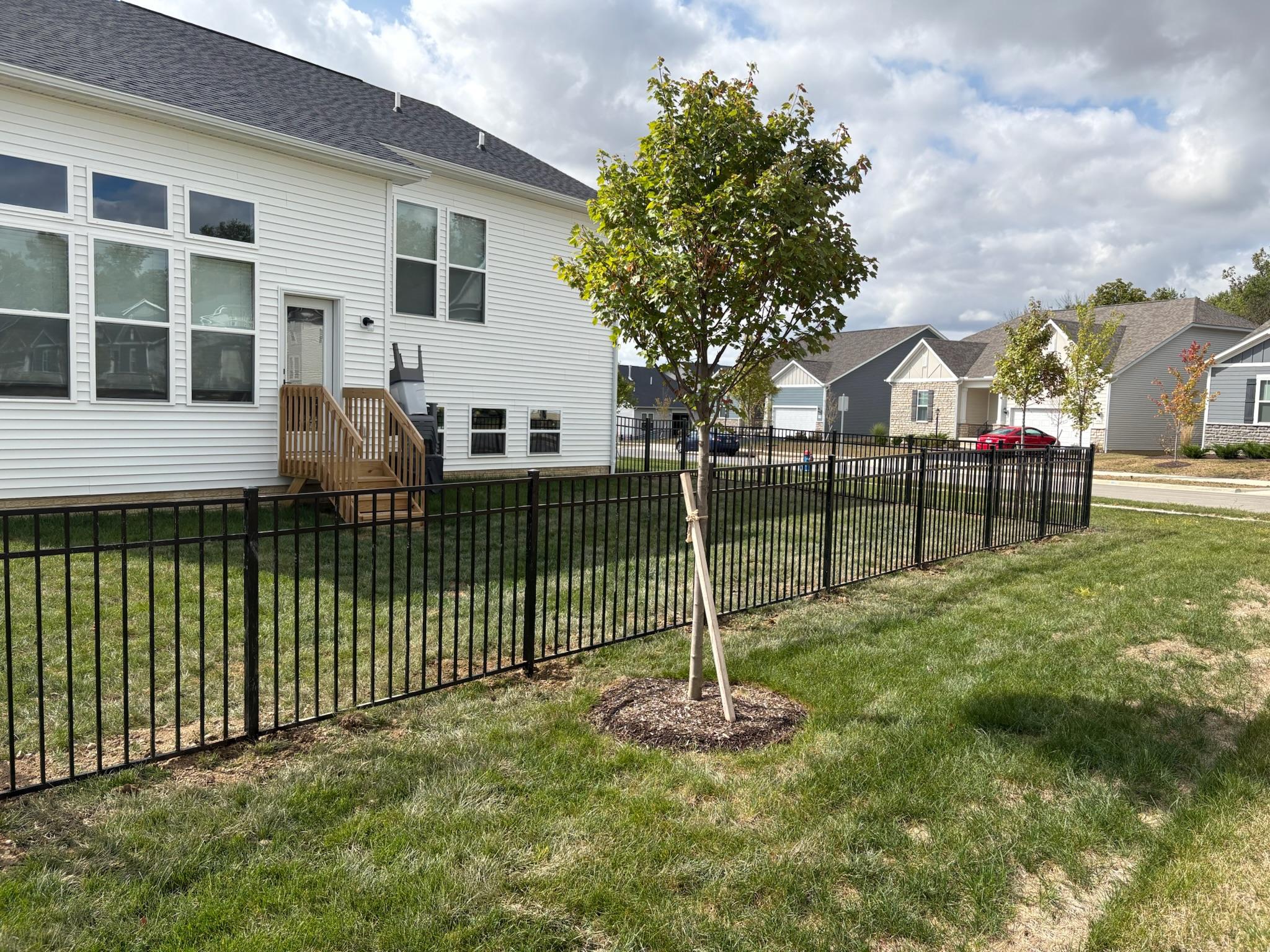
Aluminum fencing provides an open look with corrosion resistance and relatively low maintenance. It is a strong option for businesses that want a defined boundary and professional curb appeal without using a solid privacy fence.
Because aluminum maintains sightlines, it can work well around office properties, customer-facing businesses, landscaped areas and sites where security needs to be balanced with a more refined appearance. It can also be adapted to sloped or uneven ground, which helps maintain a consistent look across challenging sites.
Vinyl for Privacy and Lower Routine Maintenance
Vinyl fencing can be useful where privacy, screening and a clean appearance are priorities. It does not require painting and can reduce some of the routine finish maintenance associated with traditional wood fencing.
For commercial properties, vinyl may be most useful around areas that need visual separation, such as patios, equipment zones, service areas or other spaces where an open fence would not provide enough screening. The final choice should still account for traffic exposure, site conditions and the specific demands of the property.
Custom Fencing for Properties With Specific Requirements
Some properties do not fit a standard layout. Custom fencing solutions can address slopes, irregular boundaries, unusual gate locations or a business-specific design goal. Custom planning can also combine practical security considerations with material and style choices that better suit the building.
Consider Durability, Maintenance and Long-Term Cost
Initial price is important, but it should not be the only cost considered. Commercial fencing is exposed to weather, regular gate use, landscaping activity and sometimes vehicle or equipment traffic. A material that costs less initially may require more maintenance if it is not a good match for the site.
Businesses should compare expected upkeep, repair needs and the importance of appearance over time. Chain link and aluminum are often selected for relatively low routine maintenance while vinyl can provide privacy without painting. The best choice depends on the property rather than a universal ranking of materials.
Central Ohio weather should also be part of the planning process. Seasonal temperature changes, rain, freezing conditions and soil movement can place stress on posts and gates. Proper installation and site-specific planning help the system stay aligned and functional as conditions change.
Account for Local Requirements and Site Conditions
Commercial fence projects may be affected by local zoning, permits, setbacks, height restrictions, utility locations and property boundaries. Requirements can vary by municipality and by the details of the site, so businesses should avoid assuming that a fence allowed on one property will automatically be permitted on another.
Murphy Fence LLC works across Central Ohio service areas and can help property owners plan around applicable local considerations. Businesses should still confirm any project-specific approvals, easements or property restrictions before installation begins.
Uneven Ground and Property Layout Affect the Design
Slopes, drainage, landscaping, pavement and existing structures can change how a commercial fence should be installed. A straight-line layout may not be appropriate on every site. The installer may need to adjust panel placement, post spacing or gate locations to preserve both function and appearance.
Professional Installation Protects Fence Performance
Even a strong material can underperform if posts are poorly set, panels are misaligned or gates are not supported correctly. Professional installation helps create a stable foundation, consistent alignment and reliable gate movement. It also reduces the chance that avoidable installation problems will lead to early repairs.
Choose a Commercial Fence Contractor That Can Plan Around Your Business
A commercial fence contractor should do more than provide a material price. Look for a company that asks how the property is used, explains material tradeoffs, evaluates access points and communicates clearly about the proposed layout. Experience with commercial properties is valuable because business sites often involve larger perimeters, gates, traffic patterns and security priorities that differ from typical residential projects.
Murphy Fence LLC brings more than 20 years of fencing experience to Columbus and Central Ohio projects. The company installs commercial, chain link, aluminum, vinyl and custom fencing with an emphasis on quality materials, professional installation, clear communication and solutions tailored to the property.
Plan Your Commercial Fence With Murphy Fence LLC
The right commercial fence should protect the property, support daily operations and present a professional image that fits the business. Defining your security needs, comparing materials, planning access points and accounting for local site conditions before installation can lead to a better long-term result.
Murphy Fence LLC can help Columbus-area businesses evaluate options and develop a fencing plan around the property, budget and intended use. A consultation is an opportunity to review material choices, layout considerations and installation needs before moving forward with the project.
Frequently Asked Questions
What type of commercial fence is best for security?
The best option depends on the property and the level of security required. Chain link can provide durable perimeter protection with visibility while aluminum can combine boundary control with a more polished appearance. Height, gate placement and the overall layout are also important parts of the security plan.
How can a commercial fence provide security without hurting curb appeal?
Choose a material and design that fit the building while still meeting the property’s security needs. Aluminum can provide an open, professional look while vinyl can offer screening and chain link can be customized for practical commercial use. Proportions, color and gate placement also influence the finished appearance.
Is chain link fencing suitable for commercial properties in Columbus?
Yes. Chain link fencing is commonly used for commercial and industrial properties because it provides durable containment while preserving visibility. Different heights, gauges, coatings and privacy options can be selected according to the site and application.
Which commercial fencing options require less routine maintenance?
Aluminum, chain link and vinyl are generally selected when lower routine maintenance is a priority. Actual maintenance needs depend on the specific product, exposure, traffic around the fence and any damage that occurs over time.
What should a business consider before commercial fence installation?
Review the purpose of the fence, access points, property boundaries, site conditions, desired privacy, maintenance expectations and applicable local requirements. Planning these factors before installation helps the contractor recommend a layout and material that fit the business rather than relying on a standard solution.