
Quick Summary
Commercial fencing should protect a Columbus business without making the property look unnecessarily harsh or disconnected from its brand. The best solution starts with a site-specific security plan, then balances material, height, visibility, privacy, gates, maintenance and budget. Aluminum and ornamental-style options can provide a polished open appearance, while chain link offers practical perimeter control and can be customized with coatings or privacy slats. Murphy Fence LLC helps businesses match fencing to operational needs, property conditions and the professional image they want to present.
A commercial fence is part security infrastructure and part of the public face of a business. It can define boundaries, guide vehicles and pedestrians, discourage unauthorized access and improve the appearance of a property. The challenge is choosing a design that supports those goals without overbuilding the site or creating a barrier that conflicts with the company’s image.
For Columbus businesses, the most effective approach is to evaluate security, operations and appearance together. A well-planned commercial fencing solution should fit the way the property is used every day while accounting for maintenance, budget and local site conditions.
Start With a Security and Operations Assessment
The right fence begins with a clear understanding of what the property actually needs to protect. A warehouse, office, retail location, multifamily property and service yard can have very different exposure points and traffic patterns. Before selecting a material or style, identify the areas where security matters most and how employees, customers, vendors and vehicles move through the site.
Identify the Perimeter and Higher-Risk Areas
Review property boundaries, loading areas, equipment storage, utility spaces, rear entrances and locations that are difficult to monitor. A fence does not need to look severe to create a meaningful physical boundary. Height, spacing, gate placement and visibility can all be adjusted to make unauthorized entry less convenient while preserving a professional appearance.
The goal is not simply to install the tallest fence available. A commercial perimeter should support the property’s actual risk profile. In customer-facing areas, visibility may be valuable. Around storage or service areas, greater screening may make more sense. Matching the fence to each part of the property creates a more practical security plan.
Plan Gates Around Real Traffic Patterns
Gate locations can have as much impact on security and daily operations as the fence itself. Vehicle gates should support safe entry and exit without creating unnecessary congestion. Pedestrian gates should be convenient for authorized users while helping the property maintain controlled access.
If a business uses electronic access control, cameras or other security technology, the fence and gate layout can be planned so those systems can be incorporated by the appropriate provider. The important step is coordinating the physical perimeter with the way access will actually be managed.
Choose Materials That Match Security, Appearance and Maintenance
Material selection influences the fence’s appearance, maintenance needs, level of visibility and overall cost. There is no single material that is best for every commercial property. The right choice depends on where the fence will be installed and what the business expects it to do.
Aluminum for a Polished, Open Perimeter
Aluminum fencing is useful when a business wants a clean, finished appearance while maintaining sightlines through the fence. Its corrosion resistance and relatively low maintenance requirements make it attractive for offices, landscaped commercial properties and other locations where presentation is important.
The open design can also support visibility across parking areas or landscaped spaces. Decorative profiles and coordinated gate designs allow the fence to complement the architecture instead of looking like an afterthought.
Chain Link for Practical Perimeter Security
Commercial chain link fencing is often a practical choice for warehouses, service yards, equipment areas and larger perimeters. It provides a durable physical boundary and can be specified in different heights, gauges and coatings based on the application.
Privacy slats can be added where screening is useful, while more open sections can preserve visibility. This flexibility allows a business to use the same basic fencing system differently around the property instead of treating every boundary the same.
Vinyl and Wood Where Screening or a Softer Look Matters
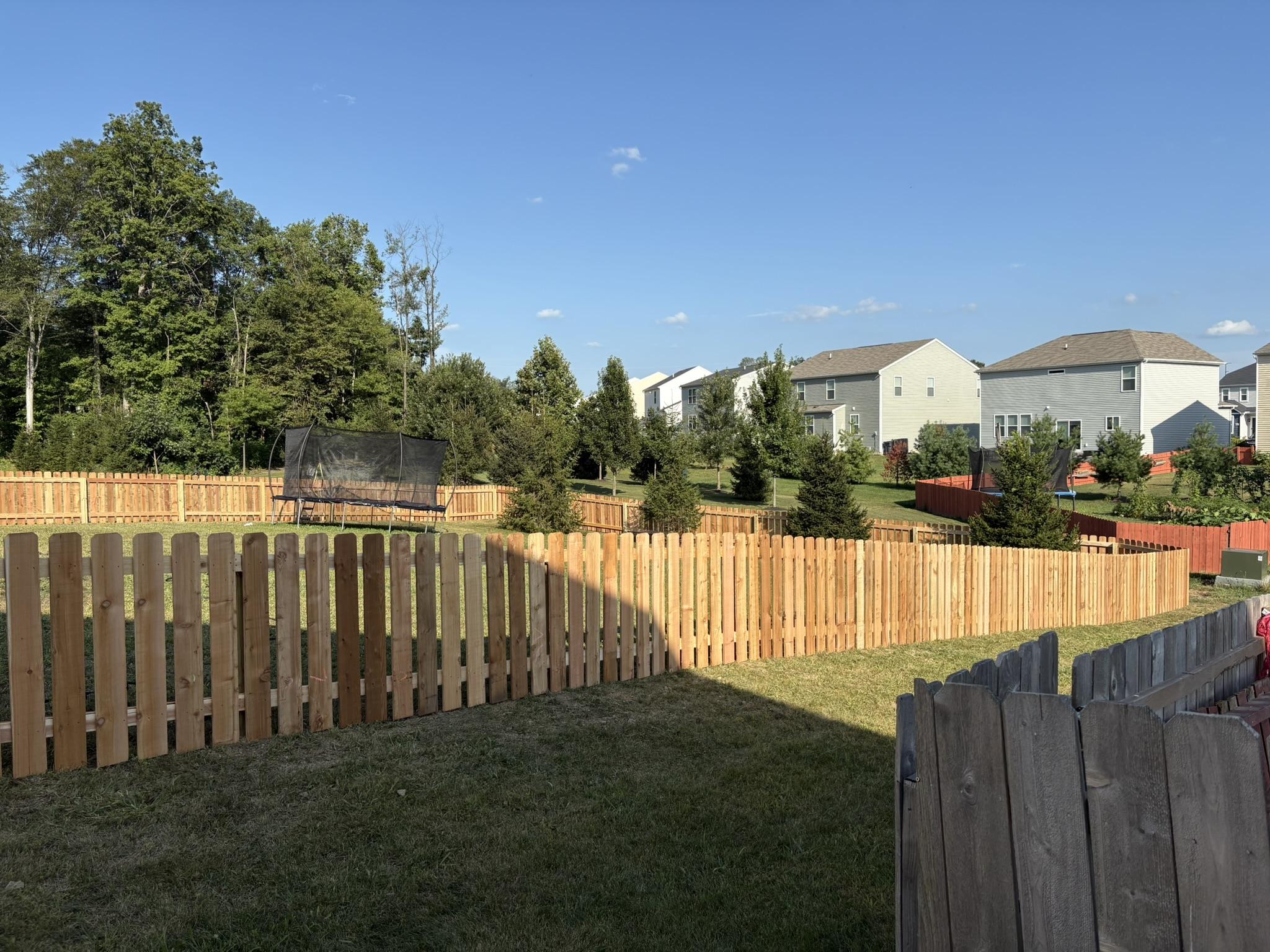
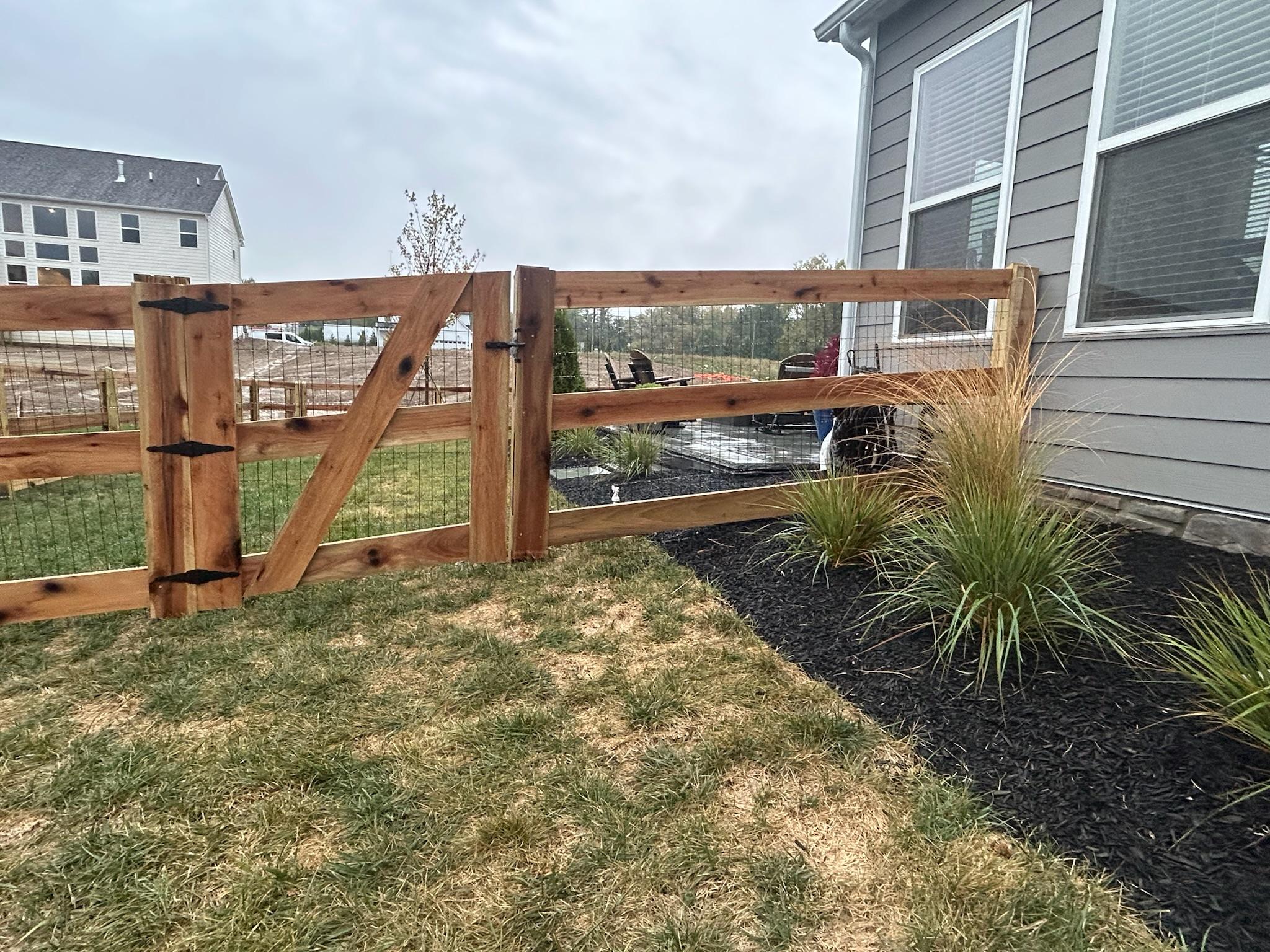
Vinyl fencing can work well where a business needs solid screening and a consistent appearance with relatively low routine maintenance. Wood offers a warmer, more traditional look and can be customized for privacy, architectural character or customer-facing spaces, although it generally requires more ongoing care.
These materials may be especially useful around patios, service areas or properties where a solid visual barrier is more important than maintaining an open line of sight. Material choice should still account for exposure, maintenance expectations and the scale of the commercial site.
Use Design to Strengthen the Business Image
A commercial fence is often visible before a customer reaches the front door. That makes proportion, color, material and alignment part of the property’s overall presentation. A fence that coordinates with the building can make the site look more organized and intentional while still performing a security function.
Coordinate the Fence With the Building and Frontage
Consider the building’s architecture, exterior finishes, landscaping and signage. A sleek aluminum fence can reinforce a contemporary property, while another site may benefit from a more traditional or privacy-focused design. Decorative posts, gate details and carefully selected finishes can improve the appearance without sacrificing function.
It can also make sense to use different materials in different zones. A more finished fence can be used along the public-facing frontage while a practical chain link system handles less visible service or storage areas. This can help balance presentation with budget and operational needs.
Use Custom Fencing When Standard Layouts Do Not Fit
Commercial properties often include irregular boundaries, grade changes, loading areas and multiple access points. Custom fencing allows the layout, gates and material combinations to be adapted to those conditions rather than forcing the property into a standard configuration.
Customization is most useful when it solves a specific problem. That could mean screening one side of a property, keeping another side visually open, creating a wider vehicle gate or matching the fence more closely to the building’s design.
Balance Visibility and Privacy Strategically
More privacy is not always more secure. In some commercial settings, visibility allows employees or security personnel to see activity near the perimeter. In other locations, screening may help protect equipment, deliveries or operational areas from public view. The right design can combine both approaches.
For example, privacy slats can be used only around sensitive sections of a chain link perimeter. Solid fencing can screen service areas while open aluminum fencing maintains sightlines along a customer entrance. Thinking in zones helps the fence support both security and appearance more effectively.
Evaluate Budget Through Long-Term Use, Not Price Alone
Upfront cost matters, but it should not be the only comparison. Maintenance, repair needs, gate hardware, coatings, privacy features and the expected service life of the fence all affect long-term value. A lower initial price can be less attractive if the material does not fit the property or requires more upkeep than the business can realistically provide.
When budget is limited, prioritize the areas that affect security and daily operations first. Decorative upgrades can then be concentrated where they make the greatest visual difference. This approach can create a professional result without spending equally on every section of the perimeter.
Plan for Columbus Conditions and Property Requirements
Central Ohio weather exposes fences to seasonal temperature changes, rain, wind and freeze-thaw conditions. Proper post setting, drainage awareness and material selection all contribute to long-term performance. Site conditions such as slopes, hard soil, existing pavement or landscaping can also affect installation planning.
Businesses should also confirm applicable local requirements before work begins. Zoning, permits, easements, sight-triangle rules or private property restrictions may affect fence height and placement. Murphy Fence LLC serves communities across Central Ohio service areas and can help property owners identify project-specific considerations during planning.
Professional Installation Protects the Design Investment
Even a well-selected material can underperform if posts are poorly placed, gates are misaligned or the fence does not follow the site correctly. Professional installation helps translate the design into a stable, functional perimeter with consistent lines and reliable access points.
Murphy Fence LLC brings more than 20 years of fencing experience to residential and commercial projects in Central Ohio. The company works with businesses to evaluate the property, compare material options and develop fencing that supports security, appearance and day-to-day operations.
Build a Commercial Fence That Protects and Represents Your Business
The best commercial fence does more than close off a property. It supports controlled access, guides movement, creates appropriate privacy and contributes to a professional first impression. Those goals are easier to achieve when material, design, gates and budget are considered as parts of one plan.
Whether your project calls for an open aluminum perimeter, a durable chain link system, privacy-focused sections or a tailored combination, Murphy Fence LLC can help develop a solution around the property’s real needs. Explore the company’s commercial fence installation options to begin planning a secure and professional perimeter for your Columbus-area business.
Frequently Asked Questions
What type of commercial fence offers the best balance of security and appearance?
The best option depends on the property. Aluminum can provide a polished open appearance, while chain link is practical for larger secure perimeters and can be customized with coatings or privacy slats. Vinyl, wood and custom combinations may work better where screening or a particular architectural look matters.
Is chain link fencing appropriate for customer-facing commercial properties?
It can be. Coated chain link, privacy slats and thoughtful placement can make it more visually refined. Some businesses also use chain link on service or rear boundaries while choosing a more decorative material along public-facing areas.
Can a commercial fence be planned around access-control systems?
Yes. Gate locations and fence layout can be designed with controlled entry in mind. If electronic access equipment is required, the physical fence and gate system should be coordinated with the appropriate access-control provider and the project scope.
How should a Columbus business choose between privacy and visibility?
Start with the purpose of each part of the perimeter. Open fencing can preserve sightlines near entrances and parking areas, while solid panels or privacy slats can screen storage, service or other sensitive areas. Many properties benefit from a combination rather than one privacy level everywhere.
Why does professional installation matter for commercial fencing?
Commercial fencing often involves longer runs, gates, traffic patterns and property-specific site conditions. Professional planning and installation help keep posts aligned, gates functional and the overall system consistent with the intended security and appearance goals.