Uneven lots and unique property shapes often turn fence installation into a tricky challenge. If you’ve been searching for “custom fence design Columbus” and wondering how to handle slopes or irregular boundaries, you’re not alone. From racked panels that follow the grade to stepped fences that highlight terraces, the right approach makes all the difference. Keep reading to explore practical ideas that fit your property’s quirks and protect your investment.
Creative Solutions for Uneven Lots
If your property is on a slope or has an irregular shape, picking the right fence design is crucial. Let’s explore how different styles can work for you.
Racked vs Stepped Fence
Choosing between a racked or stepped fence depends on your yard’s slope and your aesthetic preference. Racked fences follow the land’s contour, keeping the panels aligned with the incline. This design is ideal for gradual slopes, blending naturally with the environment. On the other hand, stepped fences create a stair-step effect, with each panel level across its length. This style suits steeper inclines and can add a bold architectural element to your landscape. Both options are practical, but your decision should reflect the terrain and your visual goals.
Retaining Wall Fence Ideas
When dealing with significant elevation changes, combining a fence with a retaining wall might be your best bet. This approach provides support while also offering privacy and security. A retaining wall can prevent soil erosion, offering a stable base for your fence. This dual-function design is perfect for creating flat usable spaces on steep properties. Consider materials like stone or concrete for the wall, paired with a wood or vinyl fence. This mix of materials not only defines boundaries but also adds a sophisticated look to your yard.
Wood and Vinyl on Hills
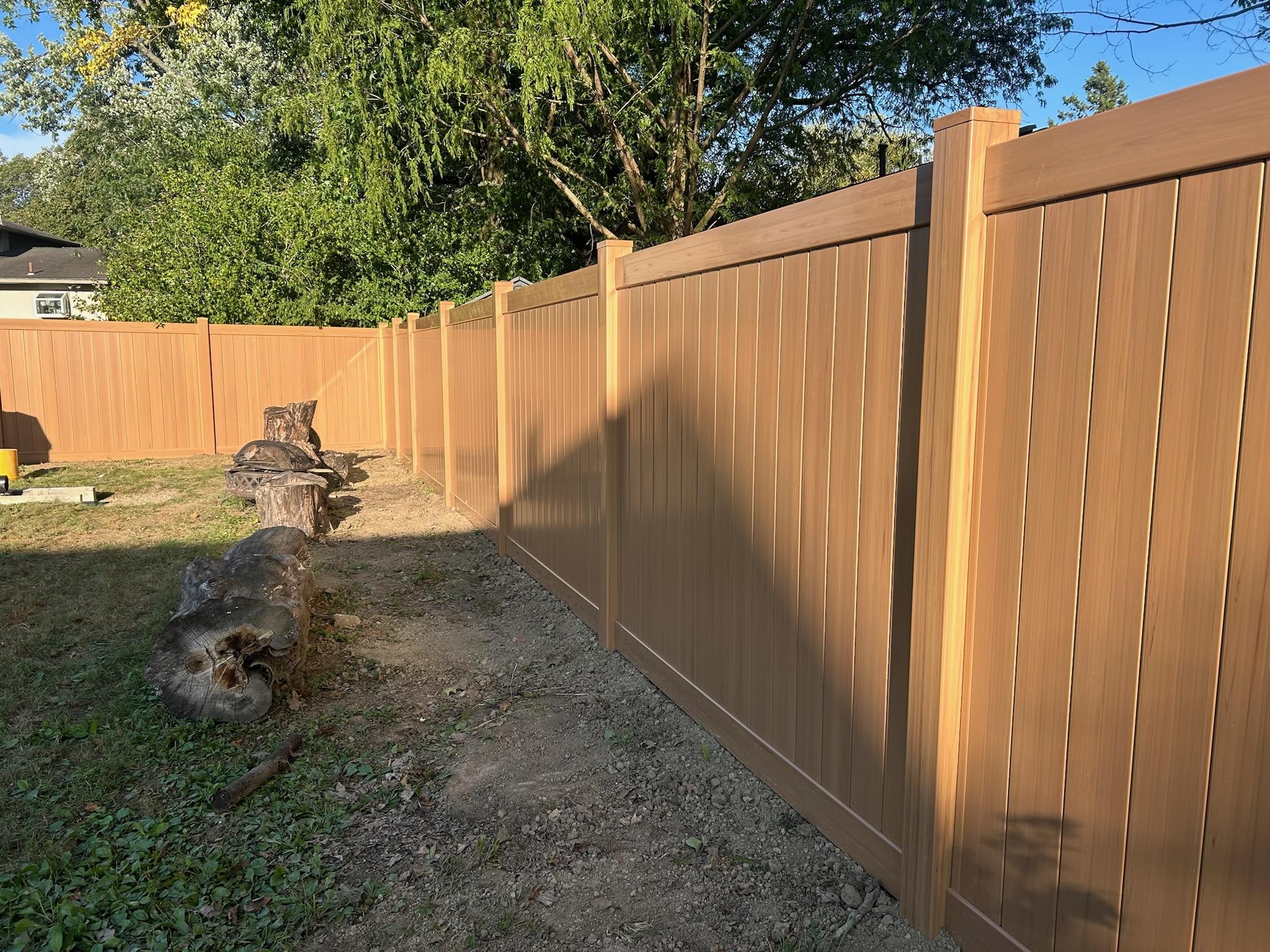
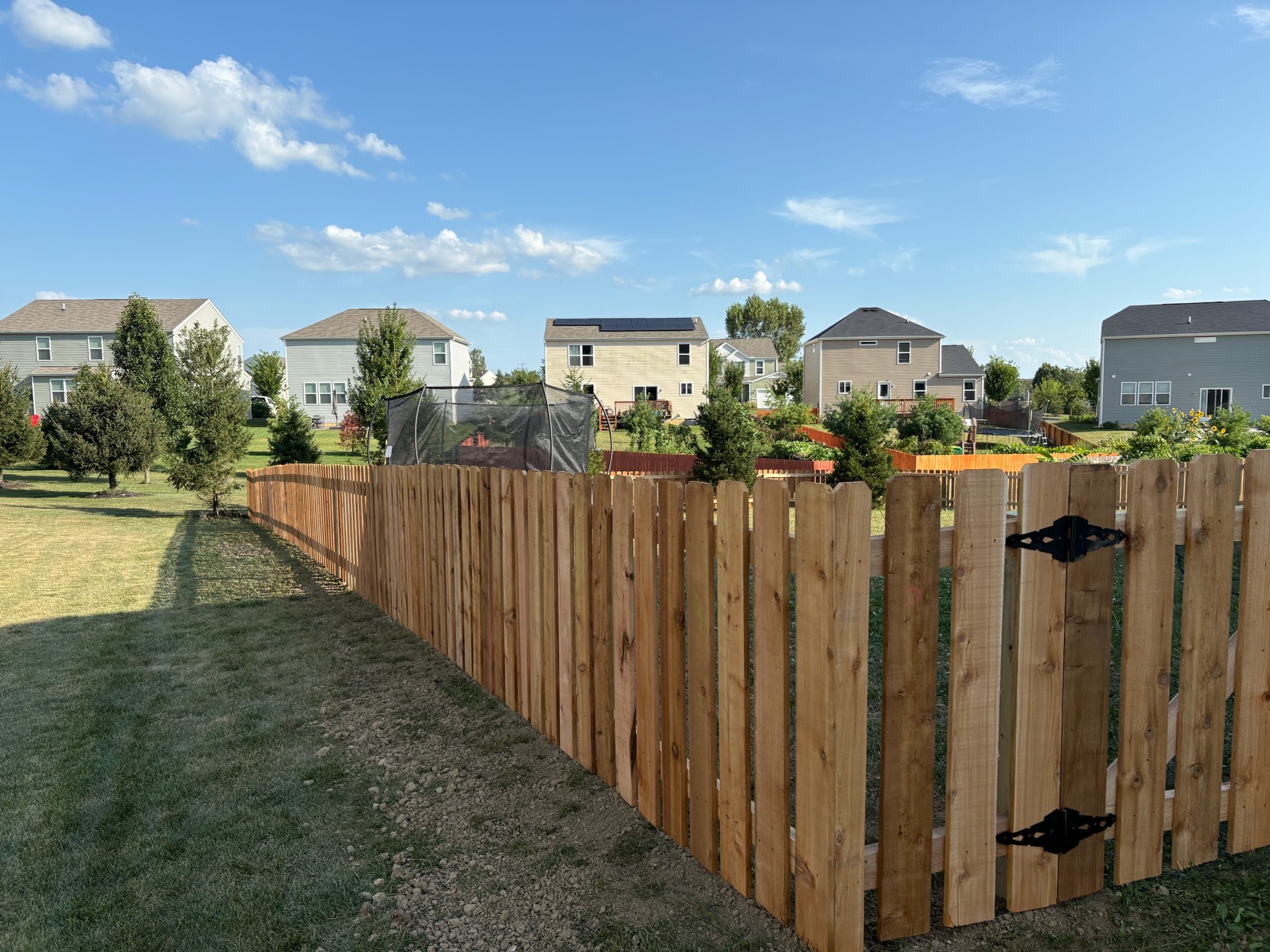
Wood and vinyl are popular choices for fencing on hills due to their adaptability and visual appeal. Wood fences can be crafted to fit any slope, providing a natural look that blends with the environment. Vinyl, on the other hand, offers a modern, low-maintenance option that can be shaped to match the contours of your land. Both materials provide durability and style, making them excellent choices for uneven properties. When installed with care, they can withstand the challenges of hilly terrain while enhancing your property’s curb appeal.
Tailoring Fences to Unique Layouts
Unique property layouts demand tailored solutions. Let’s explore how to customize fences to suit your specific needs.
Custom Gates on Slopes
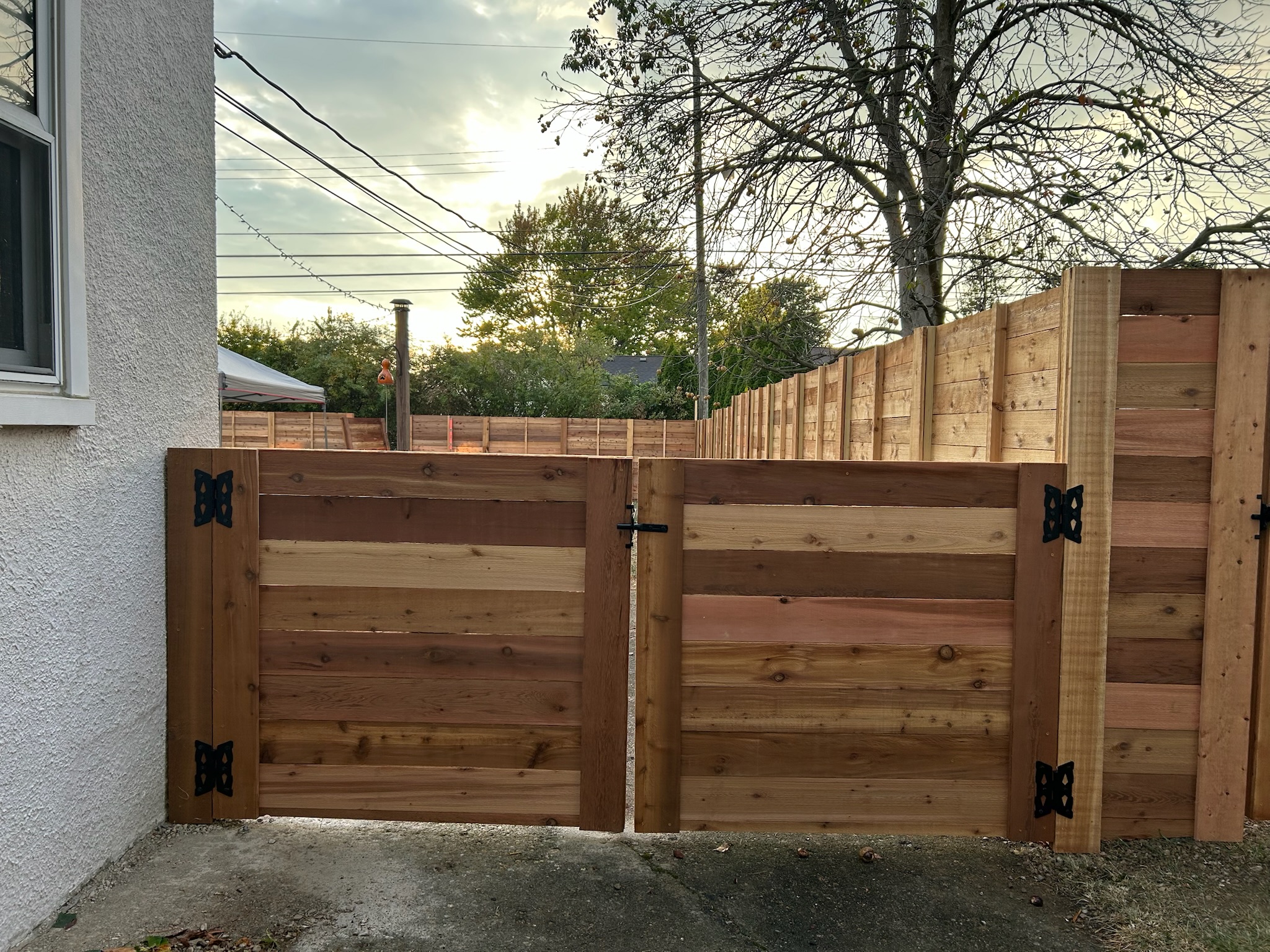
Installing gates on sloped land requires precision and creativity. Custom gates can be designed to follow the incline, ensuring they function smoothly. Sliding gates, for example, work well on slopes and offer a sleek look. Alternatively, swing gates with adjustable hinges can accommodate varying angles. The key is to choose a design that complements your fence style while providing ease of use.
Contour-Following Aluminum Fencing
Aluminum fences are excellent for following the natural contours of your land. This lightweight, durable material can be customized to fit any terrain, offering both security and style. Aluminum’s rust-resistant properties make it a long-lasting choice for outdoor use. Its flexibility allows it to adapt to curves and dips in your property, ensuring a seamless boundary line that enhances your landscape.
Privacy Screens for Curved Areas
Curved areas present a unique challenge, but also an opportunity to create privacy screens that blend with your landscape. Using flexible materials like bamboo or woven wood, these screens can curve naturally, providing seclusion without sacrificing style. They work well in gardens or around patios, creating a cozy, sheltered space. Consider adding plants or vines to enhance the visual appeal and integrate the screens with your outdoor environment.
Expert Guidance for Central Ohio
Navigating fence installation in Central Ohio requires understanding local guidelines and choosing solutions that fit the landscape.
Navigating HOA Fence Guidelines
Before installing a fence, it’s crucial to check your local HOA regulations. These rules can dictate height, style, and materials, influencing your design choices. Understanding these guidelines ensures your fence meets community standards and avoids potential issues. Consulting with a local expert can help you navigate these regulations smoothly, ensuring your project aligns with both your vision and community expectations.
Licking and Franklin County Fencing
For residents of Licking and Franklin counties, local expertise is essential in choosing the right fencing solutions. These areas offer diverse landscapes, from urban settings to rural expanses. Selecting a fence that complements your environment while providing the necessary privacy and security is key. Local professionals can offer insights into material suitability and design options that cater to the specific needs of your area.
Fairfield and Delaware County Solutions
Fairfield and Delaware counties present unique challenges and opportunities for fencing projects. Whether you need residential fencing for a suburban home or commercial solutions for a business property, understanding local conditions is vital. These counties offer varied terrain and community guidelines that impact your fencing decisions. Partnering with a trusted local contractor ensures your fence is both compliant and perfectly tailored to your needs.
Frequently Asked Questions
What is the difference between a racked and a stepped fence?
A racked fence follows the natural slope of the land, keeping panels aligned with the incline, suitable for gentle slopes. A stepped fence creates a stair-step look, ideal for steeper inclines, offering a more structured appearance.
How can I install a gate on a sloped driveway?
Gates on slopes require custom solutions like sliding mechanisms or adjustable hinges to ensure smooth operation. Opt for a design that matches your fence style and accommodates the slope’s angle for optimal functionality.
Are there specific guidelines for installing fences in Central Ohio counties?
Yes, it’s important to check local guidelines, especially HOA rules, which can affect fence height, style, and materials. Local experts can help ensure compliance with these regulations for a hassle-free installation.